Alhamdulillah, AllahuAkbar.... Federal Court has decided that NRD was right not to allow her to remove the word "Islam" from her identity card.
Tuesday, May 29, 2007

Wednesday, May 23, 2007
BLOG DAN PILIHAN RAYA KECIL IJOK
Kemajuan teknologi komunikasi dan maklumat memberikan impak yang besar kepada perkembangan sosio-politik masa kini. Teknologi ini digunakan semakin meluas di kalangan masyarakat yang mempunyai capaian dan kemahiran penggunaaannya. Senario politik terkini di negara kita telah menampakkan bagaimana penggunaan beberapa saluran internet menjadi antara alternatif utama dalam menggerakkan advokasi sosial dan politik. Pilih raya kecil Dewan Undangan Negeri Ijok pada 28 April 2007 yang lalu membuka lembaran baru pertembungan di alam maya melalui penulisan dalam blog. Lebih dari itu, penulis-penulis blog ini telah turut sama turun ke Ijok untuk mendapatkan maklumat primer dan seterusnya dimuatkan dalam blog masing-masing.
Pilihan raya kecil yang menyaksikan pertembungan antara wakil MIC dalam Barisan Nasional K. Partiban dengan pemimpin PKR, Tan Sri Khalid Ibrahim telah memihak kepada wakil Barisan Nasional dengan majoriti sebanyak 1850 undi. Buat pertama kalinya dalam sejarah pilihan raya Malaysia, liputan meluas telah diberikan melalui laporan dan analisa yan dilakukan oleh para penulis blog di Malaysia. Dari segi rekod, sebenarnya sejak pilihan raya umum ke 10 pada tahun 1999 dan ke 11 pada tahun 2004, kehadiran penulis blog dan liputan media internet telah mula mendapat tempat di kalangan pemerhati politik. Tetapi apa yang berlaku di Ijok ini menunjukkan ruang demokrasi semakin meluas dan penyertaan masyarakat yang sebahagianya bersifat apolitikal telah berubah. Mereka menunjukkan penyertaan melalui tulisan dalam blog masing-masing.
Namun begitu, kemeriahan alam blog ini tidak mencerminkan kedudukan dan keputusan sebenar pilihan raya kecil tersebut. Ini kerana blog-blog yang menonjol seperti Roslan SMS Corner,Ijok2007 dan Screenshots kebanyakannya lebih memihak kepada pembangkang dan isu-isu yang diutarakan cuba mencari kelemahan pemerintah tetapi orientasi isu-isu tersebut tidak sampai kepada golongan majoriti pengundi-pengundi di Ijok. Selain itu, walaupun penulis-penulis blog ini turut sama pergi ke Ijok, tetapi hanya sebahagian sahaja yang turut sama berkempen.
Bagi pihak Barisan Nasional pulak, pertembungan di Ijok menunjukkan parti komponen yang memerintah negara sejak merdeka ini tidak ketinggalan dalam menggunakan internet, khususnya blog ini bagi menyampaikan informasi terkini kepada rakyat dan juga menafikan tuduhan-tuduhan yang dilemparkan oleh parti pembangkang. Kewujudan beberapa blog yang aktif sepanjang kempen pilihan raya kecil DUN Ijok menjadi medan kepada mereka untuk turut sama memainkan isu-isu yang dibincangkan dalam ruang maya. Perkembangan ini telah menambahkan lagi pluraliti informasi dalam ruang siber.
Barisan Nasional yang sebelum ini tidak memberikan fokus utama kepada aktiviti blog dalam menyampaikan citra pemerintah mula berganjak untuk menggunakan medium ini. Antara isu-isu utama yang menjadi liputan utama penulis-penulis blog sepanjang pilihan raya kecil ini ialah penglibatan penasihat parti Keadilan Rakyat, Dato’ Seri Anwar Ibrahim yang menjadi tumpuan utama di Ijok di mana setiap kali ceramah yang disampaikan oleh beliau mendapat sambutan hangat. Namun begitu, keputusan bekas timbalan perdana menteri yang menyerang peribadi Timbalan Perdana menteri tidak dapat diterima oleh beberapa aktor utama ruang siber. Pada pertengahan kempen, terdapat beberapa penulis blog yang sebelumnya mengalu-alukan penyertaan beliau dalam kempen di Ijok, mula menkritik cara beliau memainkan isu yang disifatkan tidak sesuai dimainkan di peringkat masyarakat di Ijok.
Ruang maya yang sebelum ini cukup sinonim dengan parti pembangkang yang menjadikan ruang tersebut sebagai saluran alternatif dengan alasan media cetak dan media massa yang sedia ada tidak berlaku adil kepada mereka tidak boleh memandang ringan isu-isu yang dimainkan melalui saluran internet. Ini kerana masyarakat dalam era informasi teknologi ini mempunyai pilihan yang luas dalam menilai setiap isu yang diketengahkan. Isu politik yang tidak menekankan perubahan positif kepada masyarakat dan berbentuk peribadi tidak dapat membentuk persaingan politik kepartian yang berobjektif. Selain itu, sokongan yang diraih melalui alam siber tidak menunjukkan sokongan sebenar di akar umbi atau dengan kata lain pengundi di Ijok masih bergantung kepada kempen-kempen tradisional dan isu-isu pembangunan dan masalah setempat menjadi pilihan utama. Pilihan raya di Ijok layak untuk kita menggelarkan Parti Keadilan Rakyat sebagai sebuah parti alam maya (virtual party) berdasarkan sokongan yang diperolehi melalui penulis-penulis blog dan juga kempen-kempen melalui internet.
Advokasi sosial dan politik ini menjanjikan masa depan yang cerah dalam proses demokrasi di Malaysia. Penguasaan parti pembangkang dalam ruang maya mungkin bakal menjadi senjata utama dalam pilihan raya umum akan datang kerana ianya melibatkan semua rakyat terutamanya yang berada di bandar-bandar dan menikmati kemudahan capaian internet. Oleh itu, parti pemerintah sekarang perlu turut sama mengambil peluang ruang alternatif ini untuk menjadikan persaingan politik yang lebih terbuka.
Tuesday, May 22, 2007
You're right Don!
Azmi Sharom, a lecturer who is eligible to be a model for shampooing ad ( don't think my dean will put me in next sem time table if i had that kind of hairstyle) put some interesting points to ponder about the affirmative action and the bocor case involving Bung. Very worth reading ....
Of silly rules and a Bung-ling jester
It would be nice to take politicians down a peg or two every now and then to remind them that they are where they are because of us.
LIFE, as M. Nasir once sang, is like a rollercoaster. You have your ups and you have your downs. Sometimes you cry and sometimes you laugh like a loon. Just ask Sheffield United and West Ham United supporters. The past couple of weeks have been a little like that.
Maybank’s instructions that all the law firms working for them must have a bumiputra component in their make-up made me pretty annoyed.
Yes, it is fundamentally unfair to the lawyers who happen to be born non-Malay; yes, it is doubtful that they have the authority to make such a request; but what really irritated me is that this is the very sort of thing that undermines affirmative action.
Affirmative action is meant to give a leg up to those who need it. No one can deny that thirty years ago there were very few Malay lawyers around. The NEP has done a lot to fix that. We can debate the rightness of the NEP some other time.
My point is that there are plenty of Malay lawyers now, and many of them got to where they are because they got government scholarships to go abroad or they were let into local universities under the quota system.
 |
Bung: Had incurred the wrath of women’s groups by making an off-colour ‘joke’ about a fellow MP’s menstrual cycle |
You are already qualified lawyers, for goodness’ sake. Act like one. Work hard and go out there and prove that you are just as good as any other lawyer.
It is true that Maybank made a hasty withdrawal from their position because of the public outcry (which goes to show that public outcries do work).
But the damage has been done.
This episode has shown that a major Malaysian institution was set on having a race-based affirmative action policy in a situation where it is totally uncalled for.
This does not bode well for us either in terms of race relations, or for the economic well-being of the country.
When are they ever going to understand that without a merit-based system as a genuine aspiration we will all suffer, because when the best are not doing the best work, we get nothing but mediocrity.
But life is about balance, and before the froth started to drip on my T-shirt something really amusing happened.
Now, a lot has been written about the MPs who think that making jokes about a fellow parliamentarian’s menstrual cycle is the height of Dewan Rakyat wit. Those pieces have been very, very angry. That is perfectly understandable.
I, on the other hand, think that what Bung (oh, how apt a name) did – although not what he said – was great.
All right, before I get furious e-mails from women (and sensitive men in touch with their feminine side), please let me explain myself. I am one of those people who think that politicians are given far too much respect.
After all, they are only where they are because of us. It would be nice therefore to take them down a peg or two every now and then to remind them of this fact.
This would normally be the job of satirists and the like and could take the form of the written word or stand-up comedy or even television puppet shows. Unfortunately, we don’t have very much of that in these parts.
In Shakespearean plays, the fool plays an important role. As he frolics and clowns around, underneath the silliness he is actually the voice of reason.
By virtue of his being seen as merely a joker, he gets away with saying truths that others may not dare to. In this way, the King’s shortcomings are oft exposed and he is shown to be a fool himself.
We don’t have many people who can play the Shakespearean fool in Malaysia, someone who can show up those in power. But with clowns like Bung in our Parliament, we don’t really need to, as they are more than capable of being fools themselves.
And what wonderful comedic support he has, too.
When one of their fellows said a totally despicable thing and then gets off scot-free, many cheered. Oh, how they cheered.
Hurrah, one of us has made a “joke” that we would be ashamed to make in front of our mothers, but never mind, he got let off. Hip, hip, hurrah!
Or what about the woman MP who defended this jester Bung? I simply must remember my best period joke to tell her if we were ever to meet. I am sure she will find it humorous and in the best possible taste.
Indeed, Bung the fool has plenty of supporting players to make that comedy stage we call our Parliament a truly funny place indeed.
How I laughed. And I think I can hear the world laughing along with me.
Dr Azmi Sharom is an Associate Professor at the Faculty of Law, University of Malaya.
Monday, May 14, 2007
Where is the leak?
I think both of MPs cannot differentiate between Parliament and mamak's stall in their hometown. When GE is around the corner, their performances (behaviour?), especially in dealing with sensitive issues are closely monitored.
Outrage grows against ‘Bocor’ MPs
KUALA LUMPUR (May 14, 2007): The "bocor" issue, which caused an uproar in the Dewan Rakyat (Parliament) last week, has spilled over.
Outrage grows against ‘Bocor’ MPs
KUALA LUMPUR (May 14, 2007): The "bocor" issue, which caused an uproar in the Dewan Rakyat (Parliament) last week, has spilled over.
The parliamentarians who were responsible for the remark that offended women received a dressing down in the Dewan Negara today.
And elsewhere, women’s groups are preparing a protest gathering tomorrow, with calls being made for a mechanism to “take care of this kind of behaviour”.
In the Dewan Negara, Deputy Culture, Arts and Heritage Minister Datuk Wong Kam Hoong said the rough remarks made by some MPs had ruined the government’s campaign to create a well-mannered society.
He was answering a supplementary question from Gooi Hoe Hin, who suggested the ministry hold a courtesy course for “some parliamentarians”.
“Our courtesy campaign has been ruined. Pak Lah’s programme to build a first class human capital has been ruined as well.
“As MPs, we should be careful on our conduct and the way we talk, especially issues on women whom we respect,” Wong said.
He said the lot of MPs had been besmirched.
“Repeatedly (they made inappropriate remarks). How do they face their family, mothers, daughters, sisters, especially when yesterday) was Mother’s Day? I am very disappointed,” Wong said, without naming the MPs.
He said the ministry would submit a report on the matter to the premier.
Datuk Bung Mokhtar Radin (BN – Kinabatangan) and Datuk Mohd Said Yusof (BN – Jasin) had raised an outcry for uttering a sexist remark against Fong Po Kuan (DAP – Batu Gajah) during a heated exchange about the ceiling leakage in Parliament last Wednesday (May 9).
“Where is the leak? Batu Gajah MP also leaks every month,” Bung Mokhtar was quoted as saying.
Earlier, in answering another question pertaining to this issue, Women, Family and Community Development Ministry parliamentary secretary Datin Paduka Chew Mei Fun said the minister concerned would bring this matter to the cabinet soon.
At a function today, Women, Family and Community Development Minister Datuk Seri Shahrizat said she wants action to be taken to ensure that remarks that insult or belittle women will not be repeated in Parliament.
“I feel hurt at what happened and I want concrete steps taken to ensure that similar incidents do not recur.
“I will raise the matter at the cabinet meeting on Wednesday to discuss the steps to be taken,” she said.
“This has been happening many times and must not be taken lightly. More importantly, we want action.”
At another function, Deputy Prime Minister Datuk Seri Najib Razak was also asked about this matter.
Initially, he said it was up to Parliament to decide, but when pressed whether it was proper for MPs to make such remarks, he said: “I don’t want to pass judgment about what they said. They said it in a very ... It was not supposed to be taken seriously, I think if you take it with a sense of humour, then ... But of course people are making a big meal out of this issue.”
Outside Parliament, the Joint Action Group on Gender Equality (JAG) is organising a public protest tomorrow outside the Women, Family and Community Development Ministry in the Bukit Perdana Government Complex.
The protest will start at 11am with the reading of a statement from the group, after which JAG representatives hope to meet the minister.
“What we aim to achieve is to stop all this discrimination and sexism in the Parliament, and also to ensure there is a mechanism to take care of this kind of behaviour,” Women’s Development Collective executive director Maria Chin Abdullah said on behalf of JAG.
Women’s Aid Organisation executive director Ivy Josiah noted that from as early as 2000, there had been a pattern of chauvinistic remarks by the MPs.
“Occasionally there was an apology and what appeared to be a slap on the wrist, but it is not addressing the deep-seated sexist culture. There is this attitude that women are fair game,” she said.
She noted that in 2002, the banner organisation Women’s Agenda for Change submitted a three-page memorandum to the House Speaker, highlighting examples of sexist and lewd language in Parliament and urging that sexual harassment prohibitions be incorporated in the Parliamentary code of conduct.
“Hopefully we will not have to wait another five years,” she added.
The All Women's Action Society (AWAM) said in a statement the comments by Bung Mokhtar and Mohd Said insulted every girl and woman.
AWAM said “letting [the MPs] off without even a reprimand, or making them apologise, sends the signal that sexual harassment of women is acceptable”.
DAP leaders today sent a letter of protest to the office of Deputy Prime Minister Datuk Seri Najib Abdul Razak, who is also BN Whip.
The party is also organising a forum on this issue on May 17 night in Wisma YMCA in Brickfields.In the letter, the DAP called for the suspension and the sacking of the two BN MPs over their sexist remarks.
Saturday, May 05, 2007
UK lecturers suffer larger class sizes, says union
Being a lecturer, I'm facing the burden not only to educate the young generation, but also to entertain them in order to enjoy the learning process. That the truth. University and College Union (UCU) in UK, put forward some of the main obstacles.
This issue excerpted from http://www.educationguardian.co.uk/
This issue excerpted from http://www.educationguardian.co.uk/
There is average of 16.8 students to every member of teaching staff across higher education institutions in the UK, today's statistics from the Higher Education Statistics Agency (Hesa) for 2005 to 2006 reveal.
But the figure, according to the University and College Union (UCU), is higher than the average student-to-teacher ratio of 15.5 at universities in the 30 member states of the Organisation for Economic Co-operation and Development (OECD).
The union said the UK figures meant that that 65% of universities have a student-to-lecturer ratio worse than the average OECD country, which includes members from Europe as well as Japan and the United States.
When Scottish institutions were looked at in isolation, the situation was slightly better, with 47% of universities and colleges having a worse ratio than the OECD average, according to the UCU analysis.
The UCU's joint general secretary, Sally Hunt, said: "It is unacceptable that the UK, the fourth largest economy in the world, is falling behind competitors when it comes to the number of students to each member of teaching staff in our universities."
Despite the increase in the UK student-to-teacher ratio in the last 12 months, which between 2004 and 2005 was one staff member to every 16.6 students, lecturers continue to perform to a very high standard, she said.
But he warned: "We cannot keep cramming more students in our universities and expect the staff to put in even more unpaid overtime."
University employers and the organisation which represents vice-chancellors both disputed the analysis of the figures carried out by the union and its conclusions.
In a joint statement, the Universities and Colleges Employers Association and Universities UK said that there are "significant" differences in the "definitions and methodologies" used to define the international average student-to-lecturer ratios.
They said: "The OECD points out that, unlike other countries, the UK figures relating to the ratio of students to contact staff refers to public institutions only.
"Private tertiary institutions are included in other countries and it is unclear whether these countries include former polytechnics and higher education colleges."
They said that other recent figures from Hesa revealed that while the number of students in higher education increased by 2.1% between 2004 to 2005 and 2005 to 2006, there was a 2.6% rise in academic staff during the same period.
Saturday, April 07, 2007
How to define Politics?
What is the definition of politics? Everything around us has a political element I think.....
This one was excerpted from Bernama:
Blog politik mesti didaftar: Zam
Menteri Penerangan Datuk Seri Zainuddin Maidin menyuarakan sokongan terhadap cadangan untuk mendaftarkan laman blog, terutamanya yang bersifat politik.Beliau berkata jika media arus perdana tertakluk kepada pendaftaran, pemantauan dan undang-undang tertentu, tidak ada sebab kenapa pengendali blog boleh dikecualikan.
"Kita mesti tahu siapa mereka, jadi mesti ada undang-undang yang akan menyebabkan mereka kita kenali," katanya kepada pemberita di sini.
Beliau bagaimanapun berkata keperluan untuk mendaftarkan blog yang memuatkan hiburan atau komentar sosial mungkin tidaklah sebegitu besar sebagaimana blog yang didorong oleh politik.
"Apabila ada golongan politik yang hendak menggunakan blog untuk kepentingan politik atau seseorang pengendali blog yang mempunyai dorongan politik, maka kita harus kenal siapa dia.
"Politik adalah untuk mencari pengaruh di kalangan awam, politik adalah untuk mencari kuasa. Kalau kuasa, kita kena pergi kepada rakyat.
"Apabila kuasa pergi kepada rakyat, maka dia kena perkenalkan diri dia. Dia tidak jujur kalau dia menyembunyikan diri apabila dia bercakap tentang politik," katanya.
Zainuddin berkata untuk mencari kuasa politik, orang sanggup membuat fitnah dan juga menyebarkan hal-hal yang tidak benar, menggunakan sumber yang tidak disahkan atau tidak memeriksa sumber sesuatu maklumat.
"Maka ini adalah amat berbahaya sebab mereka menulis dan bertindak untuk mencari kuasa. Cita-cita mereka ialah untuk menjatuhkan kerajaan dan juga untuk mengembangkan fahaman politik mereka dan membantu mana-mana pihak untuk tujuan politik," katanya.
Zainuddin berkata beliau setuju dengan cadangan pemantauan dan pendaftaran seperti yang dicadangkan oleh Kementerian Tenaga, Air dan Komunikasi.
Zainuddin turut membincangkan isu blog dan bagaimana pendekatan Singapura terhadap perkara itu ketika beliau menemui rakan sejawatannya Menteri Penerangan, Komunikasi dan Kesenian Singapura, Dr Lee Boon Yang pagi tadi.
Zainuddin berkata Singapura mempunyai mekanisma pendaftaran bagi blog yang secara konsisten memuatkan tulisan politik.
Kata beliau, Singapura juga mempunyai rangka-kerja pelesenan secara kelas untuk mengawal selia media baru termasuk juga blog dan menaklukkan mereka kepada kod etika tertentu di bawah kawal seliaan Lembaga Pembangunan Media (MDA).
Pelesenan secara kelas secara amnya, membabitkan penggazetan terma dan syarat bagi sesuatu industri dan sesiapa sahaja yang menyediakan perkhidmatan dalam skop kelas lesen yang berkenaan, akan dianggap telah membaca terma dan syarat berkenaan dan dianggap telah dilesenkan.
Zainuddin berkata beliau berpendapat cara yang diguna pakai di Singapura adalah praktikal dan mungkin boleh diubah suai untuk di Malaysia.
"Kita akan tengok sama ada versi ini boleh dibuat di Malaysia, saya tidak tahu tapi saya rasa cara ini praktikal," katanya. - BERNAMA
Thursday, April 05, 2007
Very 'Royalty'...
That's why he holds a PhD in Political Sciences...
Keynote address at the Young Malaysians' Roundtable Discussion on National Unity and Development on Tuesday. Here is the full text of his speech.
Keynote address at the Young Malaysians' Roundtable Discussion on National Unity and Development on Tuesday. Here is the full text of his speech.
It is my pleasure to be here to deliver the keynote address at this Roundtable Discussion on National Unity and Development in Malaysia: Challenges and Prospects for Nation Building. I am always happy to take part in an event where there are many young informed Malaysians. I find that this is time well spent. Not only does it give me a chance to share my thoughts, but it also lets me do a bit of opinion research among the younger generation.
We like to say that our youth are the future of this country, but then we proceed to ignore or marginalise them. We want our future generations to be able to think and act wisely, but then we do not give them sufficient opportunities to do so.
In my view, this is not a good way to prepare those who will take our place. If the young are to be good leaders and citizens, they must be exposed to more than just abstract concepts. Even those nation states which have failed miserably have had great political ideals.
I believe that good and upright leadership must be demonstrated. It has to be both taught and observed at work. Then, those who are found to be able, must be mentored by those who are capable. In this way, success can be learned and replicated.
Finally, the young must be given responsibilities they can handle. They should be allowed to make mistakes along the way as part of their overall learning process. If we do these things, our actions will echo loudly into the future.
My address this morning is on the challenges and prospects of nation-building, a topic that is of the greatest and gravest importance. Nation-building is essential to national unity which lies at the heart of what this country was, is and will be.
With the passage of time, it seems that we are starting to forget this and it is imperative that we do not. In the time available, I hope to say enough to provide some fuel for the discussions to follow. It is my earnest wish that you will gain some further perspectives on the nature of nation- building and that you will also deliberate on specific actionable ways to further it in this country.
Confucius insisted that language must be properly used if things are to get done, if justice is not to go astray, and if people are not to "stand about in helpless confusion". He disapproved of those who misused words to hide their true intentions and actions.
So what exactly is nation-building? Not surprisingly, there are many definitions, some which differ by a little and others by quite a lot. In his book, The Making of a Nation, for example, Prof Cheah Boon Kheng defined it as "both economic progress and socio-political integration of a nation, that is prosperity and national unity".
This captures what are hopefully the two end-results of nation building, but it makes no mention of its nature and process. I prefer the more common understanding, which is that it is the use of state power across different dimensions to ensure that a country is politically stable and viable in the long term. These dimensions include ethnicity and religion.
As a brief footnote, it should be noted that nation-building is a heated and even hated notion in some parts of the world. The main reasons for this are, first, that it is taking place in the midst of great domestic turmoil and, second, that it is primarily initiated and managed by foreign powers.
Trying to cobble a functioning state by papering over deep social and political rifts is, of course, easier said than done. History has shown us, time and again, that it is much easier to break down, rather than build up, nations.
In the case of Malaysia, nation- building has occurred in generally peaceful circumstances. It was not imposed by another country. And it is undertaken mainly by collective choice rather than compulsion.
The fact that we have been able to forge a nation without resorting to the rule of the gun has made us something of a rarity and a case to be studied, if not emulated. It has allowed a relatively effective system of governance to develop. Our track record in development and resolving problems such as illiteracy, poverty and poor health has been good.
There is, of course, much more that can be done. Our institutions of governance are far from perfect and quality improvements will probably occupy us for at least the next 50 years, if not longer. Nevertheless, for all the criticisms that have been made, it is only common sense that we could not have survived, let alone prosper, these last 50 years if government institutions had not been responsive or effective.
So, what are the central challenges to nation-building going forward? Let me speak first more generally about the world, and then move specifically to Malaysia.
To my mind, there are many challenges, but one that stands out most is that of having to balance the need for change with that of continuity.
Globalisation, in particular, has unleashed sweeping economic, political, social and cultural transformations that have weakened national institutions, values and norms. It is as if all the boats on the ocean had suddenly lost their anchors, rudders and compasses overnight.
Naturally, this has produced a strong reaction in the form of a desire to preserve identity, character and tradition. These are among the strongest motivations known to mankind and have been at the foreground or background of practically every conflict that has ever been waged. Add to this, a deep sense of deprivation, powerlessness and injustice, both real and imagined, and the tension between change and continuity mounts greatly.
Managing change on a national level is never easy, and certainly not on the scale and speed that we are witnessing. Multi-ethnic countries have to be especially watchful, and particularly if they have a weak sense of national collective identity.
In the absence of a strong binding nationalism, they are prone to polarisation and competition along ethno-religious lines. The state, which may well start out by being a relatively honest broker, can become increasingly pressured to act in ways that favour the interests of one group over another.
If the pendulum swings too far in one direction, dissatisfaction and frustrations will inevitably result. These can be expressed in ways that range from passive non-cooperation to active opposition and even violent conflict. To a large extent, this has led to the fragmentation of states.
Countries need to recognise the larger macro forces at work and understand their implications. They have to engage creatively to ensure that there are sufficient investments in social capital and cohesion. They must create and capitalise on cooperative systems within societies.
In recent times, it has become usual to try and place the blame for the disintegrating state of world affairs on the doorstep of religion. This is a misunderstanding of the first order. Religion is not the cause of societal dystrophy; it is the antidote. It is a social stabiliser that allows believers to reconnect to values that are fast being lost in today's ever more materialistic and self-centred world.
What does Malaysia have to do to ensure that it continues to be successful at nation-building? Psychologists say that our short-term memory can only hold seven items. Let me outline seven guidelines that I think will have to be borne in mind in future nation-building efforts.
First, Malaysians of all races, religions, and geographic locations need to believe beyond a shadow of a doubt that they have a place under the Malaysian sun. Only when each citizen believes that he or she has a common home and is working towards a common destiny, will he or she make the sacrifices needed for the long haul.
In Malaysia, the Federal Constitution, the Rukun Negara and Vision 2020 encapsulate the rights, hopes and aspirations of the population in a way that no other documents do. The integrity of these documents must be defended and promoted, especially the first.
Second, when we seek solutions to problems in nation-building, we must be careful not to assume away problems. Nation- building is required precisely because there are stark differences within society. If we all walked, talked and thought the same, it would probably not be needed.
There will therefore be chauvinistic groups in this country, just as there are in others. They will fight the idea of national unity, block social change and try to be politically dominant. The existence of these groups, however, does not mean that nation-building is a futile exercise.
It does mean that we must be prepared to negotiate our way through and around these differences. We can, for example, create social movements that aim to enlighten and dissuade popular support being given to them.
Third, nation-building requires accommodation and compromise. In our haste to be prescriptive, we should not be so idealistic that we are incapable of also being practical. We should not allow perfection to be the enemy of the good. Yes, we should seek the best solutions and expect the highest standards of performance.
But we should also be prepared to sacrifice some part of our positions for the good of the whole. The virtues of pure self-interest are largely a myth. What seems to be a reality is that individuals end up worse off when they act out of self-interest, as opposed to acting in their collective group interests.
Fourth, if nation-building is to be successful, enforced solutions must be avoided. Nation-building is effectively rendered null and void by coercion or the threat of violence. Might cannot, and must not, be shown to be right. If solutions cannot be found within the political and social structures, there will be a strong temptation to resort to illegitimate ways and means.
Fifth, nation-building occurs when society is open, tolerant and forward-looking. So important are these values that they are embedded in Vision 2020's nine strategic challenges, as are those of mature democracy, caring society and innovation. Only by being inclusive and participative can the various sectors of our society be productively engaged. It follows that all forms of extremism, chauvinism, racism and isolationism must be guarded against. They must be soundly sanctioned socially, politically and, if necessary, also legally.
Sixth, nation-building is a process rather than an outcome. When Malaysia started off 50 years ago, there were no examples to study. There were no manuals to follow. Mistakes were made and, to a greater or lesser extent, lessons have been learned.
While a sense of impatience is perhaps fully understandable, nation-building takes place over a period of time and only with persistence. Where there is no trust, trust has to be built. Where there is no cooperative network, one has to be established. Building on layers of foundation is the only way to ensure that the process is solid and sustainable.
Seventh, the political, social and economic incentives must reward good behaviour and penalise bad. I know that this statement is virtually self-evident, but it is a fact that many countries are as likely to punish good behaviour as to reward it. After all, if there are benefits for corruption, then there is a real cost to being honest. The incentives for building up a nation must be greater and more compelling than breaking it down. The price of racial and cultural intolerance must be made prohibitively high.
I believe fostering national unity is the responsibility of every Malaysian. However, schools, institutions of higher learning and sports centres have a very special role to play. This is because the sense of national unity is best inculcated in the young.
Through textbooks, sports and interaction, educators should eliminate ethnic stereotypes. Through the imaginative teaching of the history of Islamic, Chinese and Indian civilisation, educators could foster greater understanding among different ethnic groups.
It is said that it takes a village to raise a child. I believe this is true. To me, the village comprises three main institutions - family, school and community.
From birth, we should be taught to respect and honour each other's culture and heritage. Learning to interact with others is part of this process. Playing with children of other races on the playground and in friends' homes, we learn to go beyond the colour lines early in life. In school we should be taught about other cultures and beliefs under the same roof as others of different ethnic groups - once again cutting through the colour lines.
I am aware that there are many Malaysians who are deeply troubled at the state of national unity in this country. What I have tried to do today is disabuse you of the notion that there are any "quick fix" solutions in nation-building.
If you look closely enough at any country, even those that are regarded today as highly successful, such as Japan, you will find there have been episodes in their past where events were very tenuous.
I hope we will do our best to guard against cynicism and hopelessness. And I hope we will all stay the course. Failure, may I remind you all, is a costly option.
Tuesday, March 27, 2007
Cinta itu....
I have to admit that I've been watched Cinta directed by Kabir Bathia more than 3 times... although some of my friends keep on telling me what a boring film it was.... but I see it in a different perspective. There is a Malay saying, cinta tetap dapat berbicara walaupun bibir terkatup rapat, namun cinta lebih bererti jika diucapkan dengan kata. If you love her you got to tell her... the sentence I used to tell my friends in college especially in our sophomore (more then ten years ago). And be strong to have any response. I had tried once.... but the response was in a very diplomatic manner. Left a tiny scar (in her heart too i think). I got drunk after that (with a bottle of mineral water bought in the kiosk at Mahallat). You should have a big heart to express the feelings. Love not a static verb, it's like a river, not a pond. And thanks God, for the gift, a very lovely wife. She completes me.... (a la Jerry Macguire la pulak).
Cinta itu.... to be continued
Cinta itu.... to be continued
Monday, February 05, 2007
You
TIME's selection "You" as Person of the Year gave some ideas how Internet has shaped the world. How we see the world with loaded of information provided by cyberspace? 'Me' as Person of the Year 'reflects the reality that more than ever people are not merely observers but participants in a world that we are creating' (borrowed from letters section in Time). So how about democracy in cyberspace - Kalimullah and the gang should provide an answer................
Tuesday, January 16, 2007
Biar Pecah di perut....
Calderon, si President Real Madrid FC terpaksa meminta maaf atas ketelanjuran beliau bercakap dengan pelajar di Villanueva University Centre. Komen berkenaan dengan kedudukan 'supertars' dalam pasukan itu mungkin memecah belahkan pemain-pemain ternama....
'There is vanity, egoism and they all think they are superstars,' Calderon told the students when describing the Real Madrid dressing room. 'Real Madrid players never pay for anything. You have education and culture and that's something that they in general don't possess.'
On David Beckham....
'He's going to Hollywood to be half a film star,' he said. 'Our technical staff were right not to extend his contract and that has been proved by the fact that no other technical staff in the world wanted him except Los Angeles.'
Very Interesting.....
'There is vanity, egoism and they all think they are superstars,' Calderon told the students when describing the Real Madrid dressing room. 'Real Madrid players never pay for anything. You have education and culture and that's something that they in general don't possess.'
On David Beckham....
'He's going to Hollywood to be half a film star,' he said. 'Our technical staff were right not to extend his contract and that has been proved by the fact that no other technical staff in the world wanted him except Los Angeles.'
Very Interesting.....
Monday, December 11, 2006
Sunyi...
Semenjak dua menjak ni... banyak perkara yang membuatkan pemikiranku sentiasa aktif, sentiasa berpeluh. Menerima hakikat kepluralan dalam masyarakat dan kepelbagaian ini sebagai sesuatu yang fitrah agak penat dan sakit. Isu yang melintasi sempadan tuntutan setiap etnik semakin menjarakkan kita. Tak hairan bila Perdana Menteri sendiri mengakui kedudukan masyarakat majmuk kita agak goyah. Susah hati bila anak kecil mengeluarkan petahan, 'tak naklah kawan dengan Cina', 'kedai india ni bah, takkan nak makan kat sini'... Jawapan yang perlu, apa salahnya India ke Cina ke... janji dia Islam. Orang Islam di negara India dan China lebih ramai daripada umat Islam di Malaysia. Dan... mungkin juga mereka lebih menghormati ISLAM sebagai agama daripada menghormati ISLAM sebagai satu perkataan dalam MyKad.
Hormatilah masyarakat bukan Islam sebagai saudara kita yang belum mendapat hidayah.. berikan perhatian dan bantuan kepada mereka. Doakan semoga beroleh hidayah. Itu cabang dakwah terbaik buat masa ini.... ISLAM bukan milik orang Melayu... Tetapi orang Melayu yang mengaku ISLAM perlu membela agama ALLAH ini.
Hormatilah masyarakat bukan Islam sebagai saudara kita yang belum mendapat hidayah.. berikan perhatian dan bantuan kepada mereka. Doakan semoga beroleh hidayah. Itu cabang dakwah terbaik buat masa ini.... ISLAM bukan milik orang Melayu... Tetapi orang Melayu yang mengaku ISLAM perlu membela agama ALLAH ini.
Wednesday, September 20, 2006
nEW LEADER FOR pATRIOTIST aND nATIONALIST
Japan's Abe wins party leadership, set to be PM
TOKYO (Reuters) - Shinzo Abe, a conservative advocate of a more muscular Japanese foreign policy, was overwhelmingly elected as ruling party leader on Wednesday, setting the stage for him to be chosen prime minister next week.
Abe, who will become Japan's first prime minister born after World War Two, has pledged to rewrite Japan's pacifist constitution, forge even tighter security ties with close ally Washington and put patriotism back in Japanese classrooms.
He has also promised to seek a thaw in ties with China and South Korea, chilled by outgoing Prime Minister Junichiro Koizumi's visits to a Tokyo war shrine. But he has stressed that better relations require efforts on all sides.
"The Liberal Democratic Party has pursued an ideal of making Japan richer and a country with pride," a determined-looking Abe told party lawmakers after the vote. "I would like to keep that fire going and carry on the will to push ahead with reforms."
Abe took 464 of the 702 valid votes from LDP lawmakers and party chapters, against 136 for Foreign Minister Taro Aso and 102 for Finance Minister Sadakazu Tanigaki, his rivals.
Lawmakers applauded when Koizumi, wearing a blue suit and red tie, cast his ballot in the contest that brings down the curtain on his more than five years as LDP leader, during which he battled his party's old guard to push reforms.
Abe, who turns 52 on Thursday, has promised to pursue growth while pushing economic reforms begun by Koizumi, who took power in 2001 vowing to cut his party loose from the grip of vested interests and reduce government's heavy hand on the economy.
His party victory all but ensures his selection as prime minister when parliament convenes on Sept. 26 because of the ruling Liberal Democratic Party's grip on the lower chamber.
The soft-spoken Abe has long topped the list of politicians Japanese voters prefer to see succeed Koizumi, making him the candidate of choice for a hefty majority of LDP lawmakers looking ahead to elections for parliament's upper house next summer.
Abe, first elected in 1993, became a household name four years ago for his tough stance in a feud with North Korea over Japanese citizens kidnapped by Pyongyang decades ago.
ASIAN DIALOGUE OR FRICTION?
Now Abe faces the dual challenges of repairing ties with Beijing and Seoul and keeping economic reforms on track while addressing voter worries about the widening social gaps many see resulting from Koizumi's reforms.
"I like Abe's basic stance on policy. He has good relations with the United States and I like his strong attitude towards North Korea," said Tomoya Minakawa, a 39-year-old IT engineer.
"I want the next prime minister to improve relations with China and South Korea," he added. "I'm not sure if Abe can do that, but I support him."
Abe, a third-generation politician, is thought unlikely to adopt Koizumi's combative approach in forging ahead with economic reforms and so far has not fleshed out details of how he intends to get a handle on Japan's bulging public debt.
"Frankly, I don't know much about his policies. I just know that he's popular, not whether his policies are good or not," said Hiroshi Sase, 36, who works for an employment agency.
Attention is already turning to the question of who will be awarded plum cabinet posts.
Aso is expected to get either a top party post or a cabinet portfolio after campaigning on a platform that echoed Abe's own.
Tanigaki, who clashed with Abe over Yasukuni and when to raise Japan's 5 percent sales tax, has already said he would not remain in the cabinet if he lost the LDP race.
Abe has defended Koizumi's pilgrimages to the Yasukuni Shrine, where Japanese leaders convicted as war criminals by an Allied tribunal are honoured with war dead.
He has also has sidestepped the issue of Japanese leaders' responsibility for the war and visited Yasukuni in the past.
He has declined to say whether he pay his respects there as prime minister, an ambiguity some see as leaving the door open to better ties with Beijing and Seoul.
Monday, September 18, 2006
Lee Kuan Yew Revisited
'As I was leaving, I met Tan Siew Sin. I was angry and bitter at his short-sightedness and stupidity. He had thwarted our industrialisation and brought about the separation almost as much as had the Malays Ultras. He had been determined to frustrate us at every turn. Apart from his personal dislike of Keng Swee and me, he believed that any concession to Singapore would help the PAP to win over the Chinese in Malaysia. He could not see that without Singapore, the position of the Chinese in Malaysia must weaken.'
'I could not help telling him that day, " Today is the day of your victory, the day of my defeat; but in five to ten years, you will certainly feel sad about it."
'He smirked. I do not think he understood me then, or later. He was only relieved and happy that his position as leader of the MCA and the MCA's position in Malaysia were now secure. The threat from the PAP and the Malaysian Solidarity Convention had been removed. The MCA would be supreme. But secure and supreme were relative terms in this case. four years later, in May 1969, Malay rioters in Kuala Lumpur would kill and maim hundreds of Chinese and burn their homes and cars. In 1973, when Ismail died, PM Razak promoted Hussein Onn to be his deputy. Loyal though, Tan had been to the Alliance and to UMNO, he was Chinese, and he discovered that he could not be deputy prime minister. He resigned in 1974, overcome with shame and bitter disappointment. He did not understand that he had already lost out when he had unwittingly helped to getSingapore expelled from Malaysia
'I could not help telling him that day, " Today is the day of your victory, the day of my defeat; but in five to ten years, you will certainly feel sad about it."
'He smirked. I do not think he understood me then, or later. He was only relieved and happy that his position as leader of the MCA and the MCA's position in Malaysia were now secure. The threat from the PAP and the Malaysian Solidarity Convention had been removed. The MCA would be supreme. But secure and supreme were relative terms in this case. four years later, in May 1969, Malay rioters in Kuala Lumpur would kill and maim hundreds of Chinese and burn their homes and cars. In 1973, when Ismail died, PM Razak promoted Hussein Onn to be his deputy. Loyal though, Tan had been to the Alliance and to UMNO, he was Chinese, and he discovered that he could not be deputy prime minister. He resigned in 1974, overcome with shame and bitter disappointment. He did not understand that he had already lost out when he had unwittingly helped to get
This is the true face of LKY. He was and still is a Chinese Ultras....
Wednesday, September 06, 2006
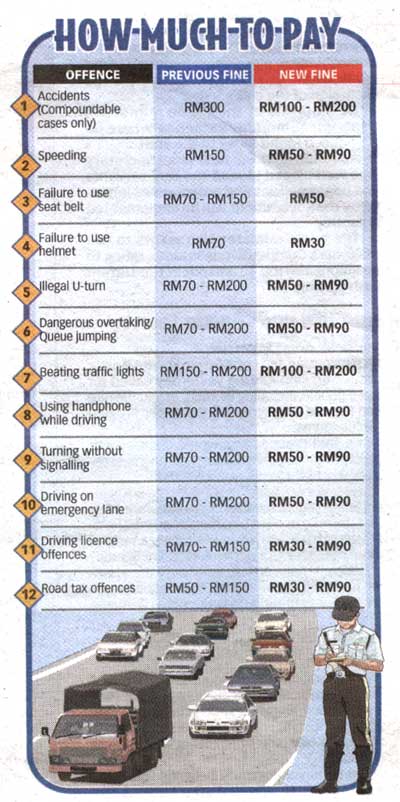
Saman trafik, Warisan jepun dan ngomolan lain...
Akhirnya....
'Japan's Princess Kiko has given birth to a baby boy, potentially resolving the royal family's succession crisis.
'Japan's Princess Kiko has given birth to a baby boy, potentially resolving the royal family's succession crisis.
The 39-year-old princess gave birth by a Caesarean section two weeks early, after complications in the pregnancy.
Princess Kiko, wife of the current emperor's second son, already has two daughters, but women are not allowed to ascend to the Chrysanthemum throne.
Her son becomes the first male heir to be born into Japan's royal family in more than four decades.' BBC News
Ini melegakan keluarga diraja Jepun. Mungkin ada harapan nak jadi Presiden (seumur hidup?) Persatuan Bolasepak Jepun satu hari nanti!
Orang tanya saya pasal budget tahun ni... susah nak bagi jawapan. Sebabnya? tak tahu kenapa. Tak ada keghairahan nak menonton pembentangan tersebut kat TV... saya bukan peminat Mahathir tp fikir Pak lah nak bentang... ngantuk pula rasanya... apa pun saya sempat bagi tahu students supaya simpan stok rokok sebelum harga naik ....
RPK kata perkahwinan Siti macam sarkas... saya setuju 1000%... bacalah No Holds Barred... dalam Malaysia Today...
Sejarah Rashid Maidin? Nasihat untuk pelajar... jgn pilih untuk baca buku yang kita rasa kita boleh setuju... tp baca semua buku yang boleh buat otak kiri dan kanan berdebat...
'If you reach a verdict of death... remember that i am a military man and should be killed by firing squad and not by hanging as a common criminal' - Saddam Hussein
Tuesday, July 18, 2006
Ke Makam Bonda
| Ke Makam Bonda |
| Kami mengunjungi pusara bonda, Tegak kami di makam sepi, Dalam kenangan kami melihat, Bibir bonda bersih lesu, Nisan batu kami tegakkan, Senyum kemboja menghantar kami, Begitulah bakti kami berikan, |
Tuesday, July 04, 2006
AUKU dan pelajar
Ahad lalu, Menteri Pengajian Tinggi menunjukkan keinginan untuk mendapatkan maklum balas dari beberapa pihak bagi meminda AUKU. Ia merupakan satu langkah yang harus diberikan sokongan sepenuhnya. Sebenarnya, isu AUKU ini sepatutnya sudah lama dibincangkan secara terbuka apabila kita melihat bagaimana krisis pendidikan di negara ini yang dilihat tidak mencapai objektifnya untuk melahirkan pelajar yang mempunyai pemikiran yang kritikal. Menurut Prof Madya Azmi Shahrom, AUKU sememangnya menyekat kebebasan pelajar-pelajar pintar untuk berpersatuan dan melahirkan pandangan yang kritikal terhadap mana-mana pihak. Akta ini, perlu dipinda kerana ada beberapa seksyen seperti seksyen 15, 15D dan 16C yang menyekat kebebasan pelajar untuk menjadikan universiti sebagai medan mereka memberikan sumbangan kepada rakyat dan pemerintah mengikut aspirasi apa yang diajar dalam setiap kuliah yang diikuti. Tiada sebab untuk pelajar mengkritik kerajaan dari sudut takrifan demokrasi yang mereka belajar di dalam kelas berdasarkan prinsip sebenar ideologi tersebut kerana ia merupakan satu bentuk praktikal dalam ilmu sains sosial. Apa yang kita sepatutnya bimbang ialah apabila pelajar berdiam diri apabila melihat sesuatu yang bercanggah dengan apa yang dipelajarinya
Thursday, June 22, 2006
Kaki judi dinasihatkan sentiasa dekat dengan Samy Vellu
Kemeriahan Piala Dunia 2006 di Jerman telah memeriahkan industri pertaruhan dengan masing-masing meramalkan pasukan yang bakal menjulang piala paling berprestij itu. Di tengah kemeriahan ini, satu peluang kepada kaki judi untuk meraih keuntungan besar apabila tukang nujum paling berprestij telah memunculkan dirinya. Cuma beliau enggan untuk menyatakan secara terbuka berkenaan dengan pasukan mana yang akan menjadi juara tetapi sedikit klu telah diberi di mana beliau telah menyebut mungkin Argentina. Dari satu sudut lain, iaitu di luar ruang lingkup piala dunia, beliau telah memberikan satu sokongan terbuka kepada satu pasukan. Pasukan ini akan berentap esok. Bagi saya ia lebih hebat dari perlawanan Perancis menentang Togo.....
' I don't want to support any team, because whatever team I support will win' ( theSun p. 2)
Jadi S. Subra harus berjaga-jaga.... mungkin pengadil telah memakai jersi pihak lawan...
' I don't want to support any team, because whatever team I support will win' ( theSun p. 2)
Jadi S. Subra harus berjaga-jaga.... mungkin pengadil telah memakai jersi pihak lawan...
Thursday, May 25, 2006
Apa ada pada politik?
'Politik dengan demikian sudah seperti sex: ramai-ramai dianggap kotor, tapi ramai-ramai pula dikerjakan -- terkadang dengan cara tidak legal ataupun tidak senonoh. Dan jika seorang pakar ilmu politik misalnya membedakan sebuah gerakan moral dari gerakan politik, maka ia pun mungkin korban kebingungan yang sama: seakan-akan yang politik bisa dipisahkan habis dari yang moral, dan sebaliknya.' Goenawan Mohamad
Hari ini membuka kata dengan meminjam tulisan Pak Goenawan dari Catatan Pinggirnya. Sebetulnya apa yang ingin diluahkan ialah bagaimana istilah politik telah disalahfahamkan dengan makna yang yang cukup memualkan. Politik dikaitkan dengan rasuah, salah guna kuasa, jatuh-menjatuhkan kawan dan yang paling berat membelakangkan kepentingan rakyat. Pelajar seringkali ditakut-takutkan dengan politik, kakitangan kerajaan tidak boleh berpolitik (habis tu apa yang dia orang buat kat pejabat? bukankan pentadbiran awam itu sebahagian daripada disiplin sains politik?) sehinggakan pensyarah universiti melontarkan kata-kata, ' saya seorang ahli akademik yang tidak mahu berpolitik', nah, habis umat ini bila mahu memisahkan politik dengan kehidupan seharian.... Jadi mari kita bincangkan bagaimana menyucikan politik.....
Hari ini membuka kata dengan meminjam tulisan Pak Goenawan dari Catatan Pinggirnya. Sebetulnya apa yang ingin diluahkan ialah bagaimana istilah politik telah disalahfahamkan dengan makna yang yang cukup memualkan. Politik dikaitkan dengan rasuah, salah guna kuasa, jatuh-menjatuhkan kawan dan yang paling berat membelakangkan kepentingan rakyat. Pelajar seringkali ditakut-takutkan dengan politik, kakitangan kerajaan tidak boleh berpolitik (habis tu apa yang dia orang buat kat pejabat? bukankan pentadbiran awam itu sebahagian daripada disiplin sains politik?) sehinggakan pensyarah universiti melontarkan kata-kata, ' saya seorang ahli akademik yang tidak mahu berpolitik', nah, habis umat ini bila mahu memisahkan politik dengan kehidupan seharian.... Jadi mari kita bincangkan bagaimana menyucikan politik.....
Monday, May 08, 2006
Another hamper to the voters
Series of hampers:
Kelantan - University?
Terengganu - University .....and now.............. here we go....
Sarawak bakal miliki lapangan terbang, pelabuhan baru
LAWAS 8 Mei - Lawas bakal mempunyai sebuah lapangan terbang baru yang dapat meningkatkan daya saing bandar di utara Sarawak ini.
Menteri Perancangan dan Pengurusan Sumber II Sarawak, Datuk Awang Tengah Ali Hassan berkata projek bernilai RM150 juta itu yang diluluskan kerajaan pusat di bawah Rancangan Malaysia Kesembilan akan dimulakan tahun ini.
Beliau memberitahu Bernama di sini hari ini, lapangan terbang itu dapat mengendalikan pesawat jenis Fokker tetapi kerajaan merancang meningkatkan keupayaannya untuk mengendalikan pesawat lebih besar pada masa depan.
Bagi menjamin daya maju lapangan terbang itu, kerajaan Sarawak dan Sabah akan membincangkan program kerjasama untuk membangunkan kawasan sempadan kedua-dua negeri, katanya.
Selain lapangan terbang, Awang Tengah yang juga Menteri Kemudahan Awam berkata sebuah pelabuhan baru akan dibina di sini dan tapaknya sudahpun dikenal pasti.
``Dengan adanya pelabuhan tersebut, Lawas berpotensi menjadi pusat eksport bagi pelbagai produk yang ada di sekitar kawasan sempadan di sini,'' katanya.
Beliau yang juga penyandang bagi kerusi Dewan Undangan Negeri (DUN) Lawas yang kini dinamakan Bukit Sari berikutan persempadanan semula oleh Suruhanjaya Pilihan Raya (SPR) pada tahun lepas, berkata Lawas juga akan memiliki sebuah hospital baru yang dianggarkan bernilai RM85 juta.
Mengenai pilihan raya negeri Sarawak kesembilan pada 20 Mei ini, Awang Tengah yang dicalonkan semula untuk bertanding berkata Barisan Nasional (BN) bersedia menerima tentangan daripada calon bebas atau calon parti pembangkang.
``Saya bersedia kerana saya tidak memperkecilkan peluang semua pihak dan saya serah pengundi untuk tentukan nasib mereka sendiri,'' katanya.
Bukit Sari yang majoriti pengundi Melayu mempunyai pengundi berdaftar seramai 9,373 orang yang terdiri daripada petani, peniaga dan kakitangan awam serta kakitangan di syarikat persendirian.
Pada pilihan raya negeri 2001, Awang Tengah menewaskan calon Keadilan Japar Suyut dengan undi sebanyak 6,299 berbanding 289 undi yang diperolehi oleh calon pembangkang itu.
- Bernama
Selamat datang aktor baru ruang sivil
Tun Dr Mahathir terus memahat namanya dalam politik tanahair. Boleh diibaratkan bakal menjadi seorang lagenda politik di negara ini, beliau terus menjadi tumpuan utama dalam senario politik Malaysia. Beliau seoalah-olah memberi isyarat bahawa penyerahan jawatan Perdana Menteri dan Presiden UMNO bukan membawa erti untuk tidak mencampuri urusan pentadbiran dan juga politik semasa. Bermula dengan komen bahawa pemerintah sekarang lemah kerana tidak mempunyai pembangkang yang kuat (merujuk kepada kemenangan besar BN dalam pilhan raya 2004), Dr Mahathir terus menggunakan kapasitinya, seperti yang sering dinyatakan beliau, sebagai seorang rakyat biasa yang mempunyai hak untuk bersuara, untuk mempersoalkan beberapa tindakan pemerintah atau lebih tepat lagi jentera pimpinan Pak lah.
Apa yang menarik untuk dibincang ialah bagaimana Dr Mahathir telah menggunakan ruang yang sentiasa dianggap sebagai ancaman kepada pemerintahannya dahulu iaitu ruang sivil untuk menghantui Perdana Menteri yang direstui untuk menggantikan beliau. Masyarakat sivil yang mudah difahami dalam konteks demokrasi negara ini ialah bagaimana individu-individu dan NGO mempunyai kebebasan untuk berkongsi kepentingan dan menyuarakannya untuk kepentingan mereka. Ruang ini sebenarnya cukup bermakna untuk menjelmakan konsep demokrasi walaupun terdapat pendekatan daripada golongan Marxis bahawa masyarakat sivil merupakan satu agen untuk menukar kerajaan yang sedia ada. Namun, pengamal masyarakat sivil di negara ini menyerahkan urusan perebutan kuasa politik kepada parti-parti politik.
Perjalanan masyarakat sivil semasa pemerintahan beliau seringkali dikritik oleh pengamal-pengamal ruang ini dan juga parti pembangkang. Peringkat awal pemerintahan beliau diserikan dengan pembebasan beberapa orang tahanan ISA tetapi beliau mula melihat bagaimana ruang sivil yang ada di negara ini sebagai satu ancaman besar kepada pemerintahan BN apabila Operasi Lalang 1987 telah menafikan kebebasan beberapa aktivis sosial dan politik di negara ini. Akta-akta seperti ISA dan OSA cukup membebankan aktor-aktor sivil dan politik di Malaysia. Ia cukup untuk membuktikan bagaiman masyarakat sivil ini sentiasa diawasi oleh pemerintahn Dr Mahathir.
Oleh itu, apa yang dapat diperhatikan pada perkembangan mutakhir penglibatan Dr. Mahathir dalam menyuarakan pandangan beliau terhadap beberapa isu penting dalam pemerintahan Pak Lah dapat menjelaskan bagaimana beliau menggunakan senjata yang sering mencucuk beliau untuk turut sama dirasai Pak Lah. Isu berkenaan dengan penjualan saham augusta milik proton, pengagihan AP dan yang terkini berkenaan dengan pembatalan pembinaan jambatan menggantikan Tambak Johor telah memeriahkan masyarakat sivil di negara kita. Isu ini berlanjutan apabila Dr. Mahathir telah menyatakan bagaimana beliau telah dinafikan hak untuk bersuara. Ini berpunca daripada keengganan pengamal media utama di negara ini yang kebanyakannya dimiliki oleh parti-parti di bawah BN untuk menyiarkan komentar beliau. Sebagai alternatif, beliau telah menggunakan internet sebagai saluran untuk meluahkan pandangan melalui beberapa surat terbukanya yang dituju khusus kepada pemerintah sekarang.
Dr. Mahathir nampaknya banyak belajar daripada pergerakan sivil yang lain dalam mengamalkan advokasi sosial yang mana pada tahun 1990-an internet menjadi ruang yang paling berkesan untuk melontarkan kritikan sosial dan politik terhadap pemerintah. Dalilnya, semasa pemerintah beliau, sebagai contoh, Malaysiakini seringkali diancam dan kemuncaknya pejabat Malaysiakini telah diserbu polis dan beberapa komputer telah dirampas. Ini kerana media alternatif ini sering memuatkan bukan sekadar berita tetapi ulasan yang kritikal terhadap beberapa tindakan pemerintah. Sejarah berulang, Dr M telah memilih untuk menggunakan ruang siber ini bagi mempertahankan kepentingan legasi pemerintahannya dahulu setelah dipinggirkan oleh media arus perdana.
Untuk seketika, kita lupakan kenangan masyarakat sivil ketika zaman Dr. Mahathir. Mari kita meraikan kedatangan aktor baru masyarakat sivil, aktor yang mungkin dapat memberi udara segar untuk ruang ini terus berlegar dalam meletakkan kepentingan rakyat sebagai pusat utama pemerintahan regim BN.
Subscribe to:
Posts (Atom)